A few weeks ago I took milk and eggs to some friends at church. A week later they thanked me in a way I was not ready for. It made me realize there’s many people telling me what Raw milk did for them, but in email form and I missed the heart-felt “Thank You” part.
That is the whole post, and I will keep it short.
What did they actually say?
Three things. One person said the eggs gave one friend the protein she needed coming off a vegetarian diet. A mother said her three girls can drink the raw milk without the stomach aches they get from store-bought milk. And that the children said thank you on their own.
Some friends at church found out we have a farm and wanted to try raw milk and eggs, so I took some along. I did not think much about it, and was happy to share it with church friends.
A week or so later they came to me, looked me straight in the eyes, and said, “Gideon, thank you so much. Seriously.”
The one friend had just come off a vegetarian diet and was trying to eat healthier. She said the eggs gave her the protein she needed to make that major change.
Another mother told me her three girls can drink our raw milk without the stomach aches they always get from store-bought milk. And when she said it I could see the mother’s joy in her eyes.
I stood there and did not know what to say.
Why does a farmer struggle to answer when someone thanks him?
Because we did not do the clever part. We keep the animals healthy and then let nature do what nature does best. Cows that are not fed soy and are not genetically modified give healthy raw milk. Chickens fed well give good eggs. That is the whole method.
That is genuinely hard to take credit for.
The difficulty in explaining what we do is that there is nothing added. Most food is sold to you on what has been put in. Ours is about what has not been taken out, and about an animal that was healthy to begin with.
So when somebody thanks me for the milk, part of me wants to say the cow deserves the credit. I have come to understand that is not quite what they mean. They are thanking somebody for leaving it alone.
What are families actually saying about the milk and the eggs?
Here are five, in their own words, from our review page. What people mention most is the taste, the color of the milk, and children who can drink it comfortably.
“This milk is the best milk I’ve ever drank. It’s completely different from store bought. My mom used to live on a farm in Europe and said it taste like her childhood. Really tasty, really nutritious, really high quality.” — K.M., Raw Cow Milk
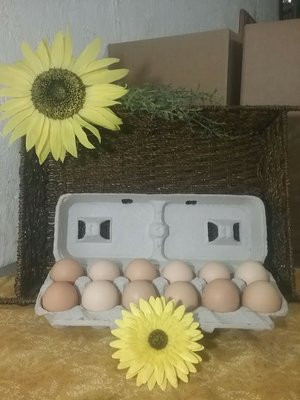
“I know these eggs are quality because regular store bought “organic eggs” make my daughter’s stomach uneasy, while these eggs from Gideon’s family farm are always a delight for her to eat and she always feels great. They have beautiful orange yolks and always taste great!” — V.D., Soy-free Chicken Eggs
“The milk has a golden type of color, it tastes very good and makes you feel fuller than normal milk. It is also very much sweeter than pasteurized.” — Diego, Raw Cow Milk
“The Family’s interest in making sure the best product reaches their beneficiaries. I love their milk, eggs, cheese and fresh vegetables and stock. Loved their farm visit too.” — Nandini, Raw Cow Milk
“This chocolate milk is perfectly chocolately, yet not too sweet. My children absolutely love it. It would be gone in 5 minutes if I let them have all they wanted.” — Gianna, Chocolate Milk
The European childhood line is the one I keep thinking about. She had drank this before. She just had not had it in a long time.
How can you help encourage mothers with Raw Milk?
Your words matter, because I am the farmer. Of course I will say it is good. When a mother searches raw milk at ten at night, most of what she finds sounds frightening, and nothing I write will settle that. A sentence from another mother will.
I hear things like this all the time. In emails, in text messages, in phone calls I take while I am out working. And somewhere along the way I got so used to it that it started to feel ordinary.
It is not ordinary.
School has started again, and I know a lot of you are thinking about what your children are eating right now, before the holidays get here and the sweets show up everywhere.
There is one more reason I am asking. I want to make a booklet for my family out of these. My parents and siblings do the work — the milking, the washing, the packing — and they hardly ever hear any of this. I do. I would like them to see it in your handwriting instead of mine.
Frequently asked questions
How long does it take to leave a review?
About two minutes. A sentence or two is plenty — you do not need to write a paragraph. The shortest reviews on our page are four or five words, and those get read just as often as the long ones.
Do I have to use my full name?
No. Most people use a first name or initials, and several of the reviews above are initials only. Use whatever you are comfortable seeing in public, because reviews appear on the site with the name you give.
What should I write about?
Whatever actually happened in your kitchen. Taste, texture, how your children took to it, whether the pickup worked, what you make with it. Please describe your own experience rather than what you think we want to hear.
Tell me what our food has done in your home
If our raw dairy — or the eggs, the butter, the cheese, whatever you receive from us — has made a difference in your home, would you take two minutes and share it?
Your words could reach a mother standing right where you stood a year ago, wondering whether she can trust any of this. I cannot convince her. You can.
Thank you so much. Many blessings to you!
—Gideon and my family, Clearview Farm
Gideon Lapp farms in Lancaster County, Pennsylvania, with his family, producing raw cow dairy, grassfed meats and soy-free eggs for families through Clearview Waterfalls Health Ministry. He has been milking cows alongside his father since age 6, and has now shared raw milk with over 5,000 families in the past twenty years. And is now helping other farmers do the same.
Why Are Our Egg Yolks Orange? A Farmer Explains
Why are our egg yolks orange?
Because of what the hen eats. Yolk color comes from carotenoid pigments — the same family of compounds that make marigolds and peppers orange — which a hen takes in from green forage, and passes into the yolk. A pale yolk means a diet with little of it. That is the entire mechanism.
People notice the color before they notice anything else. It is the first thing new families mention, and it is the thing they photograph.
So here is the honest explanation, from the person who feeds the birds.
Does an orange yolk mean the egg is better?
It means the hen ate differently. Yolk color is a reliable signal of a forage-based diet, and that is worth knowing. But color alone is not proof of quality, because pigment can also be added to feed. Color plus knowing your farmer is the real answer.
I want to be careful here, because this is where most egg marketing starts lying. Yolk color can be dialed in. Marigold extract, paprika extract and similar carotenoid supplements are ordinary, legal feed additives, and a producer can deepen yolk color without changing anything else about how the bird lives.
So a deep orange yolk from a farm you have never heard of tells you less than people think. A deep orange yolk from a farm that will tell you exactly what is in the feed tells you a great deal.
That is the difference I would ask you to hold onto. The color is real information. It is just not the whole file.
What does “pasture-raised” actually mean on a carton?
Less than most shoppers assume. “Pasture-raised” has no single federal legal definition for eggs — the meaning depends on which private certifier, if any, stands behind it. “Cage-free” and “free-range” are defined, and defined far more loosely than the pictures on the box suggest.
Here is the plain version of the label ladder, worst to best understood:
Label
What it actually tells you
What it does not tell you
Cage-free
The hens are not in cages. They may still be indoors their whole life, at high density.
Nothing about outdoor access, diet, or feed.
Free-range
There is some outdoor access. The size, quality, and duration of that access could be as little as 1 square foot, or even very hard to access.
Nothing about whether birds actually go out, or what they eat.
Organic
The feed is certified organic. (Certified organic doesn’t mean chemical-free, or pesticide-free)
Organic feed can still be largely soy and corn. Organic does not mean soy-free or corn-free.
Pasture-raised
Usually more space and real forage — but the term rests on a private certifier, not one federal rule.
It is not self-verifying. This doesn’t mean much unless you know and trust the farmer.
“Farm fresh” / “natural”
Nothing. These are marketing words with no standard behind them so any egg producer can use these words.
Everything.
Why are our chickens fed soy-free feed?
Because families kept asking for it. A number of the households we serve avoid soy, and for them a soy-free egg is the difference between eating eggs and not. It costs more to feed and it is a deliberate choice, not a marketing line.
I am not going to tell you soy is poison. Plenty of people eat it without a thought and are fine.
What I can tell you is that we have families who cannot, or who have decided not to. That was reason enough.
One of them put it this way on our review page:
“I know these eggs are quality because regular store bought “organic eggs” make my daughter’s stomach uneasy, while these eggs from Gideon’s family farm are always a delight for her to eat and she always feels great. They have beautiful orange yolks and always taste great!” — V.D., Soy-free Chicken Eggs
Studies show that soy might not affect the first generation of consumers, but by the 3rd generation there is a chance it could keep men and women from being able to reproduce.
How do our eggs get from the hen to your pickup?
Collected daily by our own family, sorted and packed by hand, and set out at the pickup location on your order day. They are never washed with the industrial detergent-and-hot-water process used at scale. If light cleaning is needed, we wipe them with a damp rag.
Soy-free eggs — frequently asked questions
Are your eggs organic?
They are not certified organic, but are what we call beyond organic. Certification is a paperwork and fee burden that a trusted farm doesn’t see necessary, so instead we will tell you exactly what the birds eat and you can decide.
Certified organic doesn’t mean they don’t have soy, corn, chemicals, or even pesticides, synthetics, seed oils, or drugs.
Our Eggs we call beyond-organic, because we don’t feed soy, corn, pesticides, herbicides, drugs, chemicals, or unnatural things like that.
What does soy-free actually mean in the feed?
It means no soybeans or soybean meal in the ration, which is the standard protein base in nearly all commercial poultry feed. Removing it costs more and takes more sourcing effort.
Why are farm eggs sometimes different sizes?
Because hens are not machines. Young hens lay smaller eggs, older hens lay larger ones, and the same bird varies through the season. Supermarket uniformity comes from grading and sorting across enormous flocks, not from the eggs themselves being alike.
Do I need to refrigerate them right away?
Preferably Yes, but not always required. If fresh eggs aren’t washed and are used within a few weeks they wouldn’t exactly need refrigeration, but most of our eggs get slightly refrigerated during transit, so my suggestion is to refrigerate them so they last longer.
Why is there sometimes a feather or a bit of straw in the carton?
Because a person packed it, not a machine. We do our best to send you a clean carton, and sometimes we enjoy adding a feather to remind you they are from real chickens.
Can you ship eggs?
Eggs can be shipped under the right packaging. Depending on your location and weather seasons. If you log into your account, and the eggs show, we can deliver them to you.
Where can I pick them up?
We run pickup locations around NJ area and some other areas, so check out our delivery map.
Crack one next to a store egg
Our soy-free eggs are on the site now, along with the raw dairy, grassfed meats and everything else our family is putting up this season.
And if you do the bowl test, send me the picture. I would like to see it.
Thank you so much. Many blessings to you!
—Gideon and my family, Clearview Farm
Gideon Lapp farms in Lancaster County, Pennsylvania, with his family, producing raw cow dairy, grassfed meats and soy-free eggs for families through Clearview Waterfalls Health Ministry. He has been milking cows alongside his father since age 6, and has now shared raw milk with over 5,000 families in the past twenty years. And is now helping other farmers do the same.
What is Real Milk?
Back in the 1920s, Americans could buy fresh raw whole milk, real clabber, buttermilk, luscious naturally yellow butter, many kinds of fresh and aged raw cheeses, and thick cream.
Today’s milk is accused of causing everything from allergies to cancer, but when Americans could buy Real Milk, these diseases were rare. In fact, fewer and fewer Westerners can actually consume today’s pasteurized, ultrapasteurized, homogenized, fat-reduced and manipulated dairy products. Sales of fluid milk are declining relentlessly at 1-3 percent per year.
What is Real Milk?
Real Milk comes from Real Cows.
The source of most commercial milk is the modern (rather than the traditional) Holstein,* bred to produce huge quantities of milk—three times more than the old-fashioned cow—and to survive on a grain-based diet rather than on grass. Her average lifespan is forty-two months, compared to about twelve years for the grass-fed cow. She must be milked three times per day, and she is very susceptible to mastitis. Her milk contains high levels of growth hormone from her pituitary gland, even when she is spared the indignities of genetically engineered bovine growth hormone, to push her to the udder limits of milk production.
Real Milk comes from Real Cows that eat Real Feed.
Real feed for cows is green grass in spring, summer and fall, with only small amounts of grain; stored dry hay, silage and root vegetables in winter. It is not soy meal, cottonseed meal or other commercial feeds, nor is it bakery waste, chicken manure, swill from ethanol production or citrus peel cake laced with pesticides. Vital nutrients like vitamins A, D, E and K2 are greatest in milk from cows eating green grass, especially rapidly growing green grass in the spring and fall. Vitamins A and D are greatly diminished, and vitamin K2 disappears when milk cows are fed commercial feed. Soy meal contains thyroid-depressing estrogen compounds called isoflavones that pass through to the milk. Most milk (even most milk labeled “organic”) comes from dairy cows that are kept in confinement their entire lives and never see green grass!
Real Milk is not Pasteurized.
Pasteurization destroys enzymes, denatures anti-microbial and immune-stimulating components, diminishes nutrient availability, denatures fragile milk proteins, destroys vitamins C, B6 and B12, kills beneficial bacteria, promotes pathogens and is associated with allergies, increased tooth decay, colic in infants, growth and behavior problems in children, osteoporosis, arthritis and heart disease. Calves fed pasteurized milk do poorly and often die before maturity. Raw milk sours naturally but pasteurized milk turns putrid.
Real Milk is not Homogenized.
Homogenization is a process that breaks down butterfat globules so they do not rise to the top. Homogenized milk has been linked to heart disease.
Real Milk contains butterfat, and lots of it!
Average butterfat content from old-fashioned cows at the turn of the 20th century was over 4 percent (or more than 50 percent of calories). Today butterfat comprises less than 3 percent (or less than 35 percent of calories). Worse, consumers have been duped into believing that low-fat and skim milk products are good for them. Only by marketing low-fat and skim milk as health foods can the modern dairy industry get rid of its excess poor-quality, reduced-fat milk from modern high-production herds. Butterfat contains vitamins A and D needed for assimilation of calcium and protein in the water fraction of the milk. Without them protein and calcium are more difficult to utilize and possibly toxic. Butterfat is rich in short- and medium-chain fatty acids, which protect against disease and stimulate the immune system. It contains glycospingolipids, which prevent intestinal distress, and conjugated linoleic acid, which has strong anticancer properties.
Real Milk contains no Additives.
Powdered skim milk, a source of dangerous oxidized cholesterol and neurotoxic amino acids, is added to 1% and 2% milk. Low-fat yogurts and sour creams contain mucopolysaccharide slime. Pale butter from hay-fed cows contains colorings to imitate vitamin-rich butter from grass-fed cows. Rennet produced by bio-engineered bacteria is used in large-scale cheese production. Mass-produced cheeses contain additives and colorings. And imitation cheese products contain vegetable oils.
Real Milk can save Family Farms.
Pasteurization laws favor large, industrialized dairy operations and squeeze out small farmers. When farmers have the right to sell unprocessed milk directly to consumers, they can make a decent living, even with small herds.
What do Studies show of Raw Milk?
Studies show:
That children fed raw milk have more resistance to TB than children fed pasteurized milk.
That raw milk is very effective in preventing scurvy and protecting against flu, diphtheria and pneumonia.
That raw milk prevents tooth decay, even in children who eat a lot of sugar.
That raw milk is better than pasteurized milk in promoting growth and calcium absorption.
That a substance present in raw cream (but not in pasteurized cream) prevents joint stiffness and the pain of arthritis.
And that children who drink raw milk have fewer allergic skin problems and far less asthma than children who drink pasteurized milk.
Many parents report an improvement in their children’s behavior when they switch from pasteurized to raw milk.
Raw milk contains numerous components that kill pathogenic bacteria in the milk, strengthen the immune system, protect the intestinal tract, prevent the absorption of toxins and ensure full assimilation of all the nutrients in the milk. These components are largely destroyed by pasteurization.
Back in the 1920s, Americans considered a supply of high-quality dairy products vital to American security and economic well-being. Today dairy farms are going out of business at an accelerating rate, unable to make a living on the low prices dairy farmers receive from the monopolistic dairy industry, leading to tragic rural decline.
What’s needed today is a return to humane, pasture-based dairying, small-scale traditional processing and direct farm-to-consumer sales; what’s needed is. . .A Campaign for Real Milk.
This week was a special week at the Farm! My parents and all my sisters were in Indiana visiting family, and the 4 boys are here taking care of all the Farm work!
We love farming, cooking, and together time, so our meals are extremely fun and this morning’s breakfast was extremely delicious!
On a regular day, I (Gideon) don’t do a lot with the animals, as my chore is to do the website work and customer service, then go to my Part-time job. But this week with just us 4 boys here, I’m managing the place.
The 4 Lapp Boys:
Gideon age 22
Jacob age 15
Jr age 12
Daniel age 7
So, early morning I bring the cows in at 5:30, then Jacob and Jr milk them, and care for the cows, calves, and horses, while I go out to the hens to make sure they have feed and water!
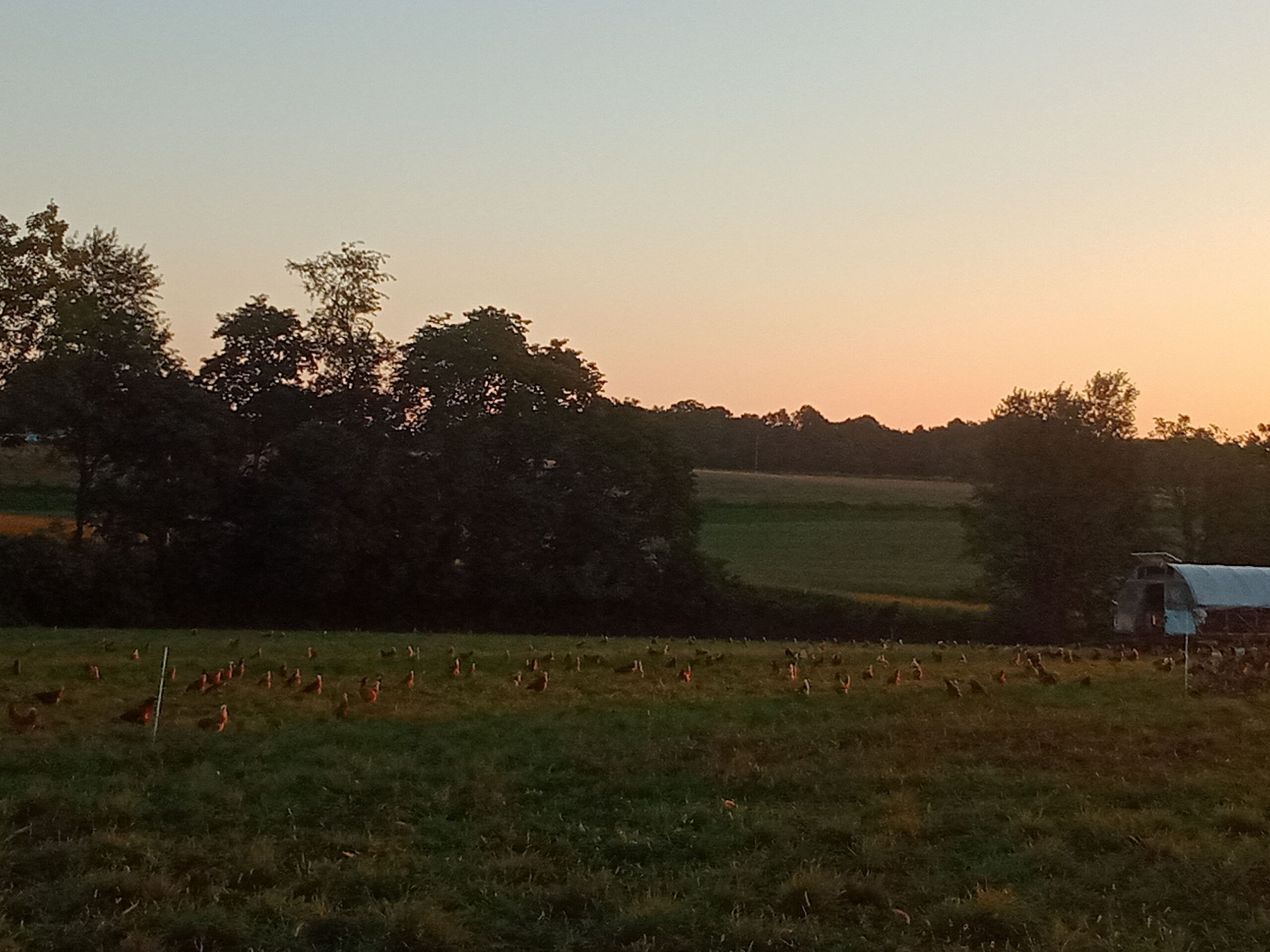
I was reminded how early the chickens are! It was still partly dark, and the chickens were all over the field! Some of them were over 600 feet away from their coop and enjoying the morning bugs and grubs!
They were all so busy, and they do this every morning! It just made me think how much better it feels in the morning then in the evening!
Once I took care of the chickens, I changed the fence so the cows have fresh grass today, then they were ready to come out in the field!
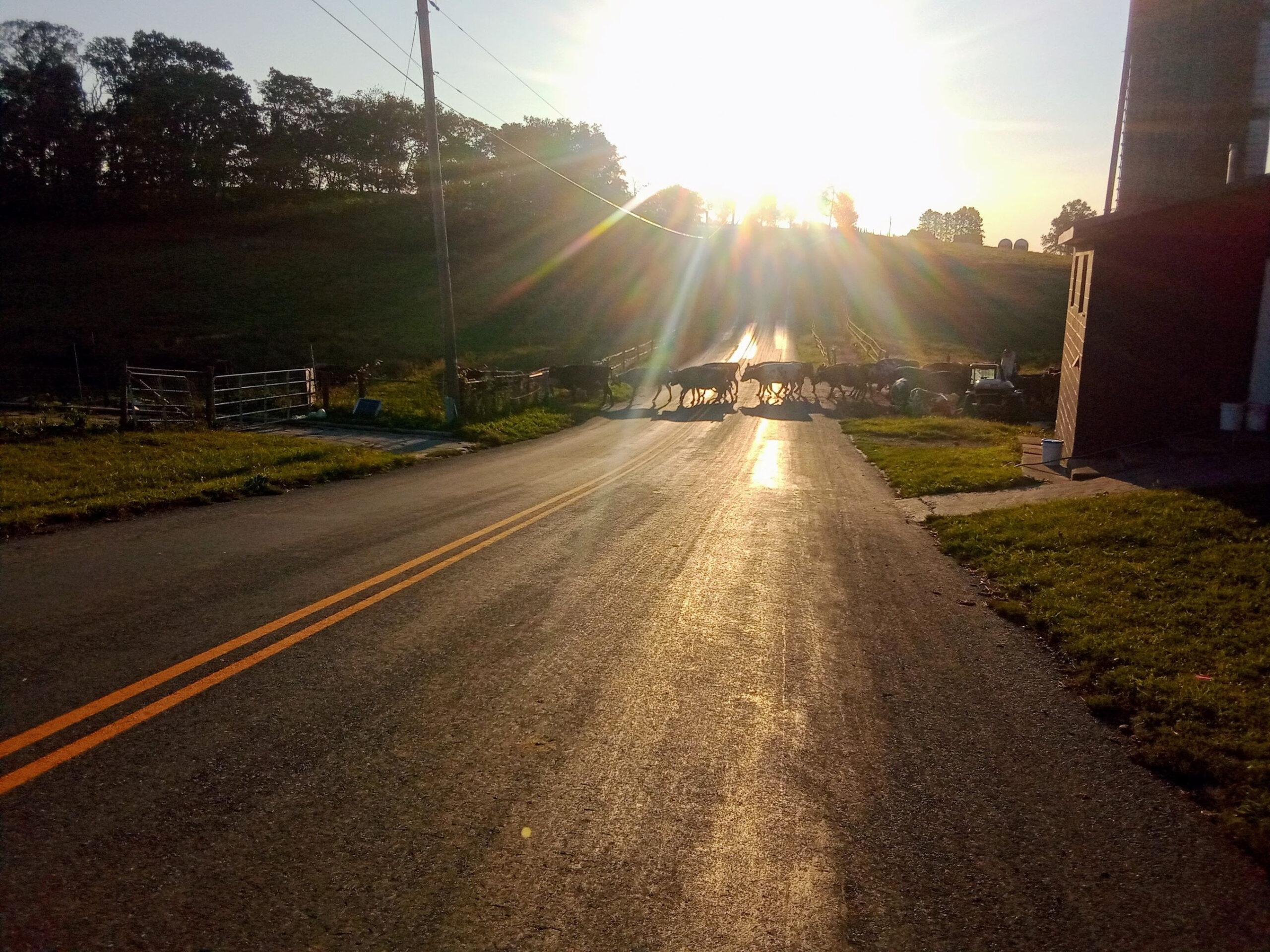
The farm property is on both sides of the road, so we let the cows over the road a lot!
Sorry for the bright sun, but this is right behind the barn, and the cows are heading into the pasture for the day!
Then came the exciting breakfast time! We had bacon, Sausage, toast, and eggs were so good! The toast, sausage, and eggs we fried in bacon grease and lard, and it was the best we ever had!
Then the rest of the forenoon we moved and fed the chickens, and this afternoon we want to do some repairs in the barn to surprise dad!
Thankfully my part-time job isn’t as busy this week, so they said I don’t need to come this week, so I’m excited to get some stuff done at the farm this week before the winter weather comes!
I hope you have a Blessed day!
-Gideon and the Lapp Boys!
Also, a reminder that the guesthouse at the Farm is in order, and is available to anybody that wants to spend time their at the Farm!
To save on bnb fees, text me to arrange your visit, but here is the Airbnb listing and info: https://airbnb.com/h/cwhminist…
(My text # is: Gideon 717-824-0537)
How to Refer other people, and get $$$ off your orders!
Are you ready to share your testimony of how you enjoy your Farm Fresh Food? You can now get Store Credit by sharing CWH Ministry with your Friends and Family!
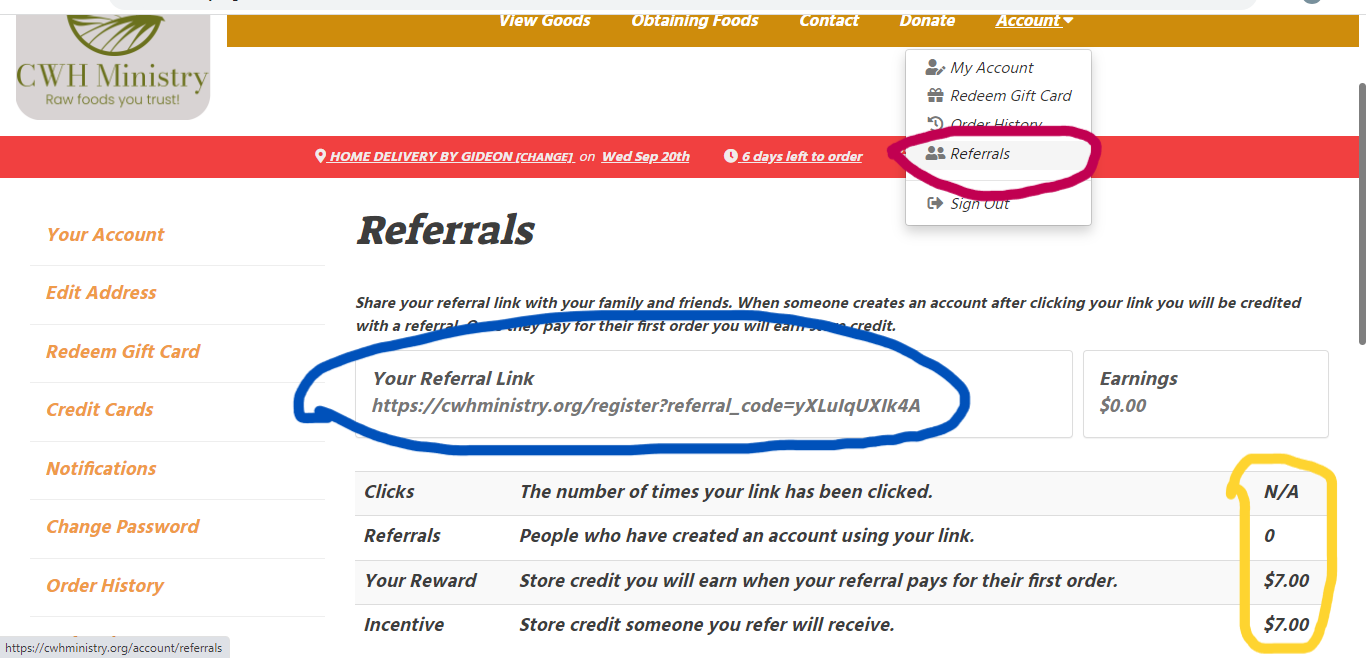
All you need to do, is share a link, and as soon as they place their first order through clicking the link you provided, you’ll receive a $7 credit, and they will get $7 off their first order!
You can share your link on pages like Social Media page, your local mother’s group, community events, church or school friends, coworkers, or even at your local Health Food store!
How do I find the Referral Link?
Sign in to your Account.
Click on Account (on top right side).
Click on Referrals.
Then you’ll see your Referral link, and below that is the amount of times it is used, and the Credit you have made.
The Credit will automatically be added to your account!
Let’s Have Fun on Facebook!
When posting on Facebook and Instagram, let’s be connected with hashtags: #rawmilknj #realfoodheals #iloverawmilk
You can share Gideon’s posts, then just add your Referral Link. And I give you permission to download the 2 pictures of the brochure, and add your own testimony with your post.
Be sure to add your Referral Link when you share on social media, so you get the store credit!
We love sharing our Home remedies that we have learned from our Grandparents!
Natural ways the Lapp Family uses to detox the body:
The first detox we most times do when we feel a bellyache, is the old way of burning toast: Toasting a Piece of Bread till it is slightly or everything black, then add Raw Butter and Honey or Salt. And Enjoy!
The burnt toast is like Charcoal to the body, and (according to our Grandparents) it really cleanses the Body and pulls toxins.
To me, this tastes good to me even if other food doesn’t. Even occasionally when I feel good, it tastes good to have toast that is slightly burnt.
—————————————————————————-
Another thing that we sometimes do even if we feel healthy, is eat Onions, Garlic, Sauerkraut or horseradish every day for 14+ days in a row. This is a bit more like a body cleanse, but the results are amazing!
Or sometimes we drink Kefir or Beet kvass for 7+ days to strengthen our immune system!
Why Butter is Better!
It is Springtime, and the Farm is Being Renewed with Life! The Grass and Herbs are growing as green as ever, the trees are blossoming, and the Animals are on Fresh Green Grass!
Like usual in Spring the cows eat lots of herbs and garlic that grow each year, which is perfect for the cows, as it cleans their bodies and makes them ready for more dense green grass!
But with eating so much herbs and garlic the milk tastes a bit more like garlic, which is wonderful for cleaning out our bodies as well! So the garlic that grows naturally in the fields, cleanses the cows, then we drink the cows milk, and the milk cleanses our bodies!
In Spring is when the Grass-fed Dairy Products are the most nutritious!
The Butter is Bright Yellow now, and it has more nutrients that other times of the year. So if you want to stock up on Healthy Butter, now is your chance! You can freeze it for up to 6 Months.
What Health Benefits does Grass-fed Butter Offer?
According to the famous researcher, Dr Weston Price, Butter is America’s best and most easily absorbed source of vitamin A, and butter contains lecithin, a number of protective anti-oxidants, Vitamin A, Vitamin E, very rich source of selenium, cholesterol, strong anti-cancer properties, & many more!
Remember that all these nutrients are all-natural, and not human-made.
According to Dr Price, butter has huge benefits with Heart Disease, Cancer, Immune System, Arthritis, Osteoporosis, Thyroid Glands, Gastrointestinal Health, Weight Gain, Growth & Development.
Interesting Facts about Butter according to Dr Price:
A Medical Research Council survey showed that men eating butter ran half the risk of developing heart disease as those using margarine.
Does butter cause disease? On the contrary, butter protects us against many diseases.
Vitamin A and the anti-oxidants in butter–vitamin E, selenium and cholesterol–protect against cancer as well as heart disease.
Butter is part of almost all Amish Family’s diets.
Enjoy your Bodily Strength, and eat Nutrients that aren’t human-invented!!
Quote from 1926: “Let food be thy medicine, and let medicine be thy food.”
-God Bless You as you continue the life He has given you!
How Long Does Raw Dairy Last?
Alright! Raw Dairy Products like it cold, so the colder it is the longer it lasts!
For all Raw Dairy if it goes beyond the suggested times below, it still stays safe, but the taste is most times not as good. (But if you can take the taste, it is safe.)
Important note: If the milk gets warm at any time, it will turn sour quicker. So for best results keep all dairy cold at all times.
Milk: If the milk stays around 35 Degrees it should stay good for around 10-14 days. If it is around 39 degrees it may just stay good for 8-12 days.
Cream: Should last around 14 days, then will turn into a delicious Sour Cream.
Butter: Can last 3-6 weeks in the Fridge. Can last 4-7 days unrefrigerated. Or can be frozen for 2-5 Months.
Kefir, Buttermilk, and Yogurt: Should taste fresh for 14 days, then will slowly start getting stronger after that. (Should have a good flavor for up to 20+ days.)
Cheese: Should stay good unopened and refrigerated for 1-2 Months. Then once opened lasts long but may get a harmless mold if not used much, but just scrape that harmless mold off, and the rest is totally fine! (Certain cheeses create a mold that is safe to eat, and is actually very healthy!)
Colostrum: Arrives to you Frozen, and can be kept frozen for up to 2 months. Then once defrosted I suggest use within 7 days.
Again, for Raw Dairy Products that are produced right, they don’t exactly go bad, but may naturally turn sour after certain periods of time.
—————————————————————————————-
Can I Freeze Milk? Yes, Freezing foods does loose some nutrients, but if you can’t pick-up the food every month, you can freeze for as long as 1-2 months or more.
When freezing Milk, always be aware that it will expand, so use a Plastic Jugs and don’t make the jug full. (If frozen in Glass bottles, it will break Glass. And when the bottle if full it will pop the Lid off.)
If you like Milk from glass bottles but want to avoid the expensive Glass Jar cost, you can order milk in plastic then transfer to your saved Glass Jars as soon as you get it!
Want to help Financially on the Farm?
Hey There,
If you feel led by God to help our Farm with our on-going Farm bills and needs, feel free to send a donation or order more food from the Farm!
To send a donation, Make check payable to: Abner Lapp 309 Clearview Drive, Quarryville, PA 17566. (Or you can send via PayPal to Abnerlapp@gmail.com)
For anybody that gives $5,000 or more, we want to express our appreciation by inviting you to the Farm for a day, and share wonderful food, share information that we have learned, having you involved in our daily chores, Horse & Buggy ride, Garden tour, talk about our Amish tradition or anything that is of interest to you, and we’ll give you some special foods to take home!
Thank you so much for your Kindness! I pray that God will richly reward you, your children, and your inheritance.
You are such a Big help to our Farm!
God Bless You!
🔒 Secure checkout powered by StripeVISAMastercardAMEXDiscoverYour card is saved securely and charged only when your order is packed.
Farm Website by U-Neac Ministry — family farms, brought online.